
2 Chronicles 32:1-23 (NLT)
1 After Hezekiah had faithfully carried out this work, King Sennacherib of Assyria invaded Judah. He laid siege to the fortified towns, giving orders for his army to break through their walls. 2 When Hezekiah realized that Sennacherib also intended to attack Jerusalem, 3 he consulted with his officials and military advisers, and they decided to stop the flow of the springs outside the city. 4 They organized a huge work crew to stop the flow of the springs, cutting off the brook that ran through the fields. For they said, “Why should the kings of Assyria come here and find plenty of water?” 5 Then Hezekiah worked hard at repairing all the broken sections of the wall, erecting towers, and constructing a second wall outside the first. He also reinforced the supporting terraces in the City of David and manufactured large numbers of weapons and shields. 6 He appointed military officers over the people and assembled them before him in the square at the city gate. Then Hezekiah encouraged them by saying: 7 “Be strong and courageous! Don’t be afraid or discouraged because of the king of Assyria or his mighty army, for there is a power far greater on our side! 8 He may have a great army, but they are merely men. We have the Lord our God to help us and to fight our battles for us!” Hezekiah’s words greatly encouraged the people. 9 While King Sennacherib of Assyria was still besieging the town of Lachish, he sent his officers to Jerusalem with this message for Hezekiah and all the people in the city: 10 “This is what King Sennacherib of Assyria says: What are you trusting in that makes you think you can survive my siege of Jerusalem? 11 Hezekiah has said, ‘The Lord our God will rescue us from the king of Assyria.’ Surely Hezekiah is misleading you, sentencing you to death by famine and thirst! 12 Don’t you realize that Hezekiah is the very person who destroyed all the Lord’s shrines and altars? He commanded Judah and Jerusalem to worship only at the altar at the Temple and to offer sacrifices on it alone. 13 “Surely you must realize what I and the other kings of Assyria before me have done to all the people of the earth! Were any of the gods of those nations able to rescue their people from my power? 14 Which of their gods was able to rescue its people from the destructive power of my predecessors? What makes you think your God can rescue you from me? 15 Don’t let Hezekiah deceive you! Don’t let him fool you like this! I say it again—no god of any nation or kingdom has ever yet been able to rescue his people from me or my ancestors. How much less will your God rescue you from my power!” 16 And Sennacherib’s officers further mocked the Lord God and his servant Hezekiah, heaping insult upon insult. 17 The king also sent letters scorning the Lord, the God of Israel. He wrote, “Just as the gods of all the other nations failed to rescue their people from my power, so the God of Hezekiah will also fail.” 18 The Assyrian officials who brought the letters shouted this in Hebrew to the people gathered on the walls of the city, trying to terrify them so it would be easier to capture the city. 19 These officers talked about the God of Jerusalem as though he were one of the pagan gods, made by human hands. 20 Then King Hezekiah and the prophet Isaiah son of Amoz cried out in prayer to God in heaven. 21 And the Lord sent an angel who destroyed the Assyrian army with all its commanders and officers. So Sennacherib was forced to return home in disgrace to his own land. And when he entered the temple of his god, some of his own sons killed him there with a sword. 22 That is how the Lord rescued Hezekiah and the people of Jerusalem from King Sennacherib of Assyria and from all the others who threatened them. So there was peace throughout the land. 23 From then on King Hezekiah became highly respected among all the surrounding nations, and many gifts for the Lord arrived at Jerusalem, with valuable presents for King Hezekiah, too.
Background
In 2 Chronicles 32, we read about the Assyrian invasion of Judah during the reign of King Hezekiah (~687 B.C.). The Assyrian king, Sennacherib, had already begun his attack on the kingdom of Judah, and Hezekiah knew the city of Jerusalem, the capital, would be the next target. Faced with this impending threat, Hezekiah took decisive action. Rather than relying on force alone, he sought wise counsel from his advisors, laid out a comprehensive strategy, and worked tirelessly to protect Jerusalem. This historical account provides rich insights and powerful analogies for understanding how to withstand the attacks of the devil, the world, and even our own fleshly desires.
Analogy 1: Israel as the Body
In the Old Testament, Israel was God’s chosen nation, a vessel for revealing His glory to the world. The nation can be compared to the human body: when one part is injured, the entire body is affected. This principle is illustrated in:
- Ephesians 4:16 (NLT) – He makes the whole body fit together perfectly. As each part does its own special work, it helps the other parts grow, so that the whole body is healthy and growing and full of love.
- Romans 12:4-5 (ESV) – 4 For as in one body we have many members, and the members do not all have the same function, 5 so we, though many, are one body in Christ, and individually members one of another.
where Paul speaks of the unity and interdependence of the body. Around 250 years before the Assyrian invasion, Israel’s unity had already been compromised. The northern tribes rebelled against King Rehoboam (Solomon’s son), leading to the division of the nation: the Northern Kingdom (which became known as Israel) and the Southern Kingdom (aka Judah). As a result, the strength of the entire kingdom was weakened, and this disunity made the nation of Judah much more vulnerable to attack. Just as a physically weak body causes the heart to become more susceptible to injury or attacks, the fractured nation of Israel faced greater threats against Jerusalem.
*Verses for further study about the body: 1 Corinthians 12:12-31
Analogy 2: Jerusalem as the Heart
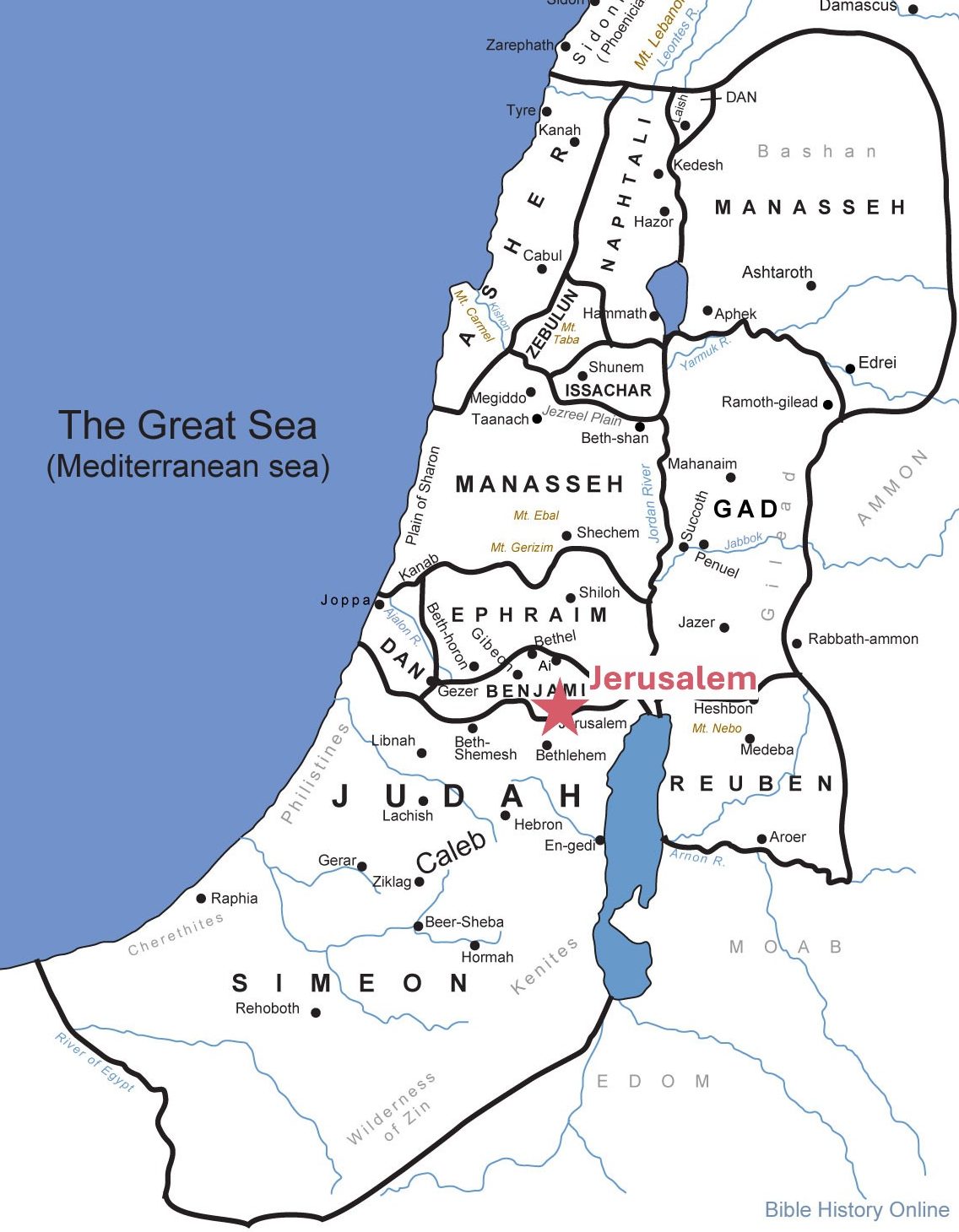
Jerusalem was the capital of Judah and had previously been the capital of Israel (250 years prior). Here, the city of Jerusalem symbolizes the heart of the nation. As the capital of any kingdom or country is the central point of leadership and life, Jerusalem was the lifeblood of Judah. Without a capital, a nation ceases to exist; so, if Jerusalem fell, Judah would be crippled. Physically speaking, Jerusalem was also a central point of the entire nation of Israel (see map above) again showing the significance of this analogy between the heart of the body and Jerusalem as the “heart” of Israel. This comparison mirrors the importance of the human heart—it’s the core of our physical life and, spiritually, the source of our thoughts, desires, and words just as Proverbs 4:23 (NIV) tells us:
“Above all else, guard your heart, for everything you do flows from it.”
Just as a broken heart brings death to the body, a spiritually compromised heart leaves us vulnerable to sin. For this reason, the Bible continually emphasizes the need to guard our hearts against attack.
Analogy 3: Cutting Off Water as Fasting
One of Hezekiah’s strategies to protect Jerusalem was to cut off the water supply to the city. The Assyrian army, if successful, would be deprived of vital resources, forcing them to leave eventually. This act of cutting off the water is akin to fasting—a powerful tool for spiritual warfare. Though cutting off the water may have caused some issues physically for Jerusalem, King Hezekiah and his officials knew that withholding worldly resources could make the city less attractive to the invaders. In our spiritual lives, fasting helps remove distractions and temptations, allowing us to focus on God and prevent the enemy from finding footholds. Fasting might not always seem like the most practical step, but it’s often the most effective way to make space for God’s intervention.
*Verses for further study about fasting: Matthew 17:21, Matthew 6:16-18, Isaiah 58:6, Joel 2:12, Psalm 35:13, James 4:10
Analogy 4: Preparations as Guarding the Heart
King Hezekiah’s preparations for Jerusalem were a model for guarding our hearts. In verses 5-8, Hezekiah strengthens the city’s defenses by repairing broken walls, building towers, reinforcing the city’s outer defenses, making new weapons, appointing military officers, and encouraging the people. Each of these actions provides valuable lessons for guarding our spiritual hearts:
1. Repairing Broken Walls: The first step to strengthening a city’s defenses is repairing what’s broken. Spiritually, this means addressing areas of weakness in our hearts—whether it’s past trauma, unresolved sin, or emotional scars. By repenting and seeking healing, we remove vulnerabilities that the enemy could exploit and use as a gateway for an attack. (Psalm 147:3, Jeremiah 17:14, Acts 3:19, Matthew 4:17)
2. Building Towers: In ancient times, towers were used as lookout posts to detect approaching threats. Similarly, we need to stay vigilant in our spiritual lives, watching for any temptation or obstacle that could trip us up. By staying alert, we can prevent ourselves from falling into sin or losing sight of our relationship with God. (Matthew 26:41, 1 Peter 5:8)
3. Reinforcing with a Second Wall: Strengthening the existing defenses is essential. Hezekiah’s addition of a second wall outside the first is a reminder that we need boundaries in our lives to protect us from falling back into old sins. Setting clear limits—whether it’s cutting off toxic relationships, limiting social media exposure, or implementing accountability measures—reinforces our commitment to living for God. (Acts 17:26, Matthew 5:37, Romans 14:12)
4. Making New Weapons: Hezekiah also ordered the creation of new weapons and shields. Spiritually, these represent the knowledge of God’s Word which is outlined in Ephesians 6:16-17 (NIV):
16 In addition to all this, take up the shield of faith, with which you can extinguish all the flaming arrows of the evil one. 17 Take the helmet of salvation and the sword of the Spirit, which is the word of God.
Jesus Christ exemplified this in Matthew 4 when He defeated Satan’s temptations with Scripture. When we learn the truth of God’s Word, we create new “weapons” to fight off the lies the enemy tries to plant in our minds.
5. Appointing Military Officers: King Hezekiah knew that he couldn’t protect Jerusalem on his own. He needed others to help defend the city. In the same way, we need a godly community around us—brothers and sisters in Christ who hold us accountable, pray continuously, and support us in our spiritual journey. (Galatians 6:2, Matthew 18:20, Hebrews 10:24-25)
6. Encouraging the People: Finally, Hezekiah spoke words of encouragement to the people of Jerusalem. Just as leaders in the Bible often spoke truth to strengthen the faith of their people, we, too, must speak God’s promises over our lives, reminding ourselves and others that God is our ultimate protector. Our voice has the power to reinforce faith and dispel fear, so we need to use our words in a way that aligns with the Word. (Proverbs 18:21, Ephesians 4:29, Colossians 4:6)
The Power of Prayer
Despite all of Hezekiah’s preparations, King Sennacherib, the Assyrian king, sent a message to Jerusalem, boasting that not even the God of Israel could save them. This mirrors how the enemy works in our own lives—he tries to plant doubts and discouragement before the battle even begins. The devil knows that if we give in to his lies, we will lose faith in God’s ability to deliver us. In response to Sennacherib’s taunts, Hezekiah, together with the prophets, turned to God in prayer. Their prayers strengthened their faith and affirmed their trust in God’s power. As a result, God intervened, sending an angel to defeat the Assyrian army. The invaders never even reached Jerusalem.
*Verses for further study about prayer: 1 Thessalonians 5:17, Mark 11:24, Philippians 4:6-7, Colossians 4:2
Final Thoughts
King Hezekiah’s wisdom in defending Jerusalem offers us a powerful example of how to protect our hearts and trust in God during times of spiritual attack. He didn’t merely rely on human strategy—he combined practical preparations with deep spiritual faith. Similarly, we must take action to guard our hearts, strengthen our spiritual defenses, and trust God to fight on our behalf. While lies and difficulties may come, we can be confident that Jesus Christ will ultimately have the victory, and He will receive the glory.
 The Christian Girl Chat
Leave a comment